
A First for Us: Responding to an Equine Coronavirus Outbreak
This month, I want to share an experience that was a first for our team—a confirmed equine coronavirus outbreak on a client’s yard. It’s a situation none of us ever want to face, but one that demonstrated just how valuable preparation, communication, and swift action can be.
The First Call: Something Isn’t Right
Late one evening, a long-standing client rang to say a new schooling livery—who had arrived only the previous day—seemed unwell. This was a horse they knew well, having had him in previously. The owner had assured them he was fit and back from a separate yard where he’d been doing fitness work.
But when they rode him that morning, during the warm up period he was unusually lethargic, blowing heavily, and simply not himself. They stopped immediately, contacted the owner again, and then took his temperature. It was over 38.5°C.
Two things made me immensely proud:
- They listened to the horse. They didn’t dismiss him as “lazy.”
- They listened to my nagging! Their next step was to take his temperature!
A vet was called straight away. While waiting, the team took the temperatures of every horse on the property—20 in total—and activated their ‘In the event of an outbreak’ action plan. This alone significantly limited what could have become a much larger outbreak.
Containing the Risk: Zones, traffic light system, and Teamwork
The yard is arranged in a U-shape of outdoor stables, plus a small indoor barn of four boxes. The affected horse was stabled indoors, and this barn immediately became the Red Zone. These horses stayed in, and my client personally took over their care.
The remaining horses were turned out and treated as Amber Zone animals. None had directly contacted the sick horse, but they had shared staff and equipment. Their dedicated groom used a separate entrance, with:
- Boot dip
- Hand sanitiser
- Yard-specific overalls
- Strictly no entering the main yard
Temperatures were checked daily.
This is exactly why we build protocols—to remove uncertainty and allow quick, confident action. They followed their plan perfectly.
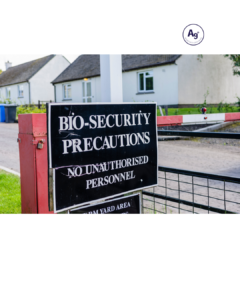
Why I Was Called In
Although the team handled the situation exceptionally well, my client wanted reassurance—and rightly so. She also needed us on site the next day for an emergency disinfecting session.
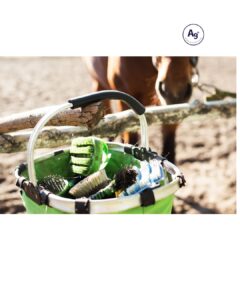
Disinfecting during an outbreak is essential. It significantly reduces the spread, disinfecting before cleaning kills the pathogens and makes follow-up cleaning safer and more effective without aspirating pathogens back into the environment. We sanitised:
- Stables
- Equipment
- Horsebox
- Yard surfaces
We used full PPE, disinfected everything before leaving, and followed strict decontamination procedures once home.
Disease Progression: A Difficult Week
Over the following days, two more horses developed raised temperatures and went off their food.
A young mare had a very mild 24-hour temperature spike with no other symptoms.
An elderly stallion—turned out alone in a separate pen—became seriously ill. His temperature soared, he showed respiratory signs, and he required IV fluids and emergency admission to an equine hospital. Despite fighting hard and initially recovering, he sadly developed colic and passed away. His age and underlying conditions meant he was always at greatest risk.
This is a sobering reminder:
Even horses that never leave the yard are vulnerable to disease brought in by others.
Over the following days, two more horses developed raised temperatures and went off their food.
A young mare had a very mild 24-hour temperature spike with no other symptoms.
An elderly stallion—turned out alone in a separate pen—became seriously ill. His temperature soared, he showed respiratory signs, and he required IV fluids and emergency admission to an equine hospital. Despite fighting hard and initially recovering, he sadly developed colic and passed away. His age and underlying conditions meant he was always at greatest risk.
This is a sobering reminder:
Even horses that never leave the yard are vulnerable to disease brought in by others.
A Successful Containment: What Went Right
With over 20 horses on site—including a foal—this outbreak could have been much worse. Instead, thanks to swift, structured action:
- The outbreak was controlled within a week.
- No horses were moved off the property.
- Turnout continued for a further two weeks to cover incubation and post infection shed periods.
- Temperatures were monitored throughout.
- We were called back to carry out a second full yard disinfection before horses returned to stables.
My client’s confidence and commitment to the plan truly limited the spread and impact.
Lessons Learned: What Could Prevent This in Future?
In a perfect world, the horse would have been isolated on arrival—but many busy yards struggle with this. What wouldhave been practical was:
- Taking his temperature on arrival (he was already ill).
- Daily temperature checks for any new arrival for three weeks—or for the full duration of their stay if shorter.
- Routine use of boot dips, hand sanitiser, and dedicated equipment on high-turnover yards.
Remember the golden rule:
“HOT before SNOT”
Horses show a temperature rise up to three days before they become infectious.
Final Thoughts
This outbreak was a challenge, but also a testament to preparation and teamwork. The yard acted swiftly, responsibly, and with compassion—protecting their horses and each other. I couldn’t be prouder of how they handled an incredibly stressful situation.
If you’d like help reviewing or creating a disease-control plan for your yard, I’m always here to support you.
Stay vigilant, stay safe, take those temperatures!