
Your essential guide to keeping hooves in top condition this winter.
This month has been all about hoof health as our horses are either spending more time in their stables or are stood in wet muddy fields.
Hoof care;
Farrier – regular visits from your farrier will help keep your horses’ hooves in top condition, research shows that trimming every 4-6 weeks is key, leaving trimming to 6-8 weeks or longer has been shown to increase the risk of your horse having hoof problems.
Why? Because hoof health and quality are directly affected by the pressure travelling through it! So, a balanced hoof has an equal pressure where as a longer un-balanced hoof has unequal pressure, directly affecting hoof quality!
Environment – turnout and companionship matter. While horses no longer have access to a “Natural environment” we can simulate it by turning horses out and exercising over different areas and surfaces to allow the hooves to naturally cleanse themselves.
Horses are social creatures. Horses turned out alone can experience anxiety, which leads to imbalances in their gut health, which in turn affects hoof quality
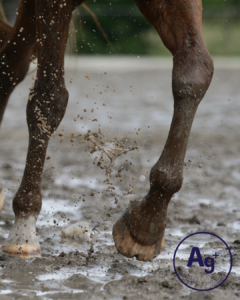
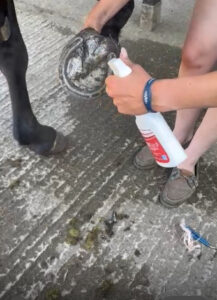
Environmental Winter challenges- wet muddy ground presents specific challenges to hoof health. Wet ground causes hooves to soften and expand. If hooves are not allowed to dry out periodically, this can lead to issues like thrush, abscesses and weakened hoof walls.
A good solution is to provide a dry hard-standing area where your horse can spend part of its day to allow its hooves to dry out, this will help maintain hoof integrity.
Did you know?
That nailing shoes onto wet hooves means that the nails do not hold well, so shoes are lost more frequently.
Ideally wet muddy feet need to be cleaned and left to dry for at least one hour before the farrier visits to prevent this happening!
The stabled environment
– managing bedding and hygiene. The right bedding, proper ventilation and regular mucking out are essential for keeping hooves healthy. Keep in mind;
- Bedding type: good bedding provides both support and absorbency! It should allow for proper airflow to reduce the risk of fungal or bacterial growth.
- Moisture control: too much moisture on the surface of the bedding can soften hooves, a bedding that is too dry can cause hooves to become brittle and cracked. Balance is key!
- Ammonia: did you know that prolonged exposure to ammonia breaks down the hoof wall!
Exercise – movement is key. Movement stimulates blood flow to the hooves, which encourages healthy hoof growth and strengthens hoof tissue. Nothing promotes good circulation like exercise.
Think of it this way: the best farrier, nutrition and environment won’t help if your horse isn’t getting enough movement!
Hoof dressings – what’s best for winter? Not all hoof care products are created equal!
Greasy dressings prevent the hoof from breathing leading to long term damage. Hoof dressings containing formalin a dilute form of formaldehyde should be avoided as they can make hooves brittle and prone to cracking. Hoof dressings containing solvents and tar also damaging to hooves.
Avoid caustic agents; copper sulphate, bleach and turpentine, they do initially kill microbes but they also harm healthy tissue.
There are products on the market now without harmful ingredients. Like our Endosan disinfectant which is also organic and biodegradable.
Common hoof diseases – how to prevent them? Some of the most common hoof issues linked to the environment include:
- Cracks: the wet-dry cycle can cause cracks, allowing bacteria and fungi to enter the hoof.
- Abscesses: saturated hooves soften, allowing bacteria to enter causing painful abscesses.
- Thrush: caused by anaerobic bacteria and fungus that thrive in wet bedding.
- White line disease: A condition where the hoof wall separates often caused by prolonged wet conditions.
These conditions can be prevented by keeping hooves dry, clean and disinfected in EndoSan spray regularly.
Team effort – maintaining healthy hooves through the winter requires a holistic approach. Regular farrier visits, balanced nutrition, consistent exercise and stable management all play a vital role in ensuring your horses hooves stay in great shape. Remember using EndoSan regularly will kill the pathogens that cause hoof disease.
EndoSan hoof spray;
- tested to BS EN 1656 and BE EN
- veterinary grade hoof disinfection
- highly effective in the presence of organic matter
- organic and biodegradable
- no need to rinse
INSTRUCTIONS FOR USE: Spray the hoof, hold the hoof up until the fizzing ceases. Spray once or twice a day. Suitable for regular use. If your horse has thrush then spray twice a day for 3-5 days until it has cleared up.
APPLICATION: Spray hooves including sole, frog, clefts and heels.
Top Tip – pick out your horse’s hooves daily!
Did you know? That even if your horse lives out, spraying with EndoSan will still make a difference even when you have to put the hoof back down into wet muddy ground!
Don’t forget to check out the Thrush fact sheet – independently vet checked and the hoof health poster on our website