
Hello horse lovers!
Let’s chat about something none of us want to see on the yard — ringworm. It’s not the nicest topic, but being clued-up can really help stop it spreading and get our horses back to full fluff quickly.
What is Ringworm (Dermatophytosis)?
First things first — ringworm isn’t actually a worm! It’s a fungal infection that affects the skin and hair.
In horses, it’s usually caused by two types of fungi: Trichophyton and Microsporum.
Here in the UK, ringworm is sadly pretty common — it’s classed as endemic, meaning it’s always around to some degree.
It’s also zoonotic, which means it can pass from horses to humans (and vice versa). So if your horse is infected, take care — gloves and good hygiene are your best friends.
Incubation & Risk Factors
Ringworm doesn’t show up right away. The incubation period is 4–30 days, so by the time you notice it, your horse may have had it for a while.
It tends to appear more often in autumn, winter and spring, when it’s damp and horses are rugged up.
Those most at risk include:
• Youngsters and older horses
• Horses with weak immune systems
• Horses with small skin injuries (from rubbing, bites or tack)
The most common places you’ll spot lesions are the girth, saddle area, flanks and face.
Because fungal spores are tough little things that can live for ages, ringworm spreads easily — directly(horse-to-horse) or indirectly via tack, rugs, brushes, stables, people, trailers — even cats, dogs or birdscan carry it.
Clinical Signs — What to Look For
Ringworm can be sneaky at first!
Watch out for:
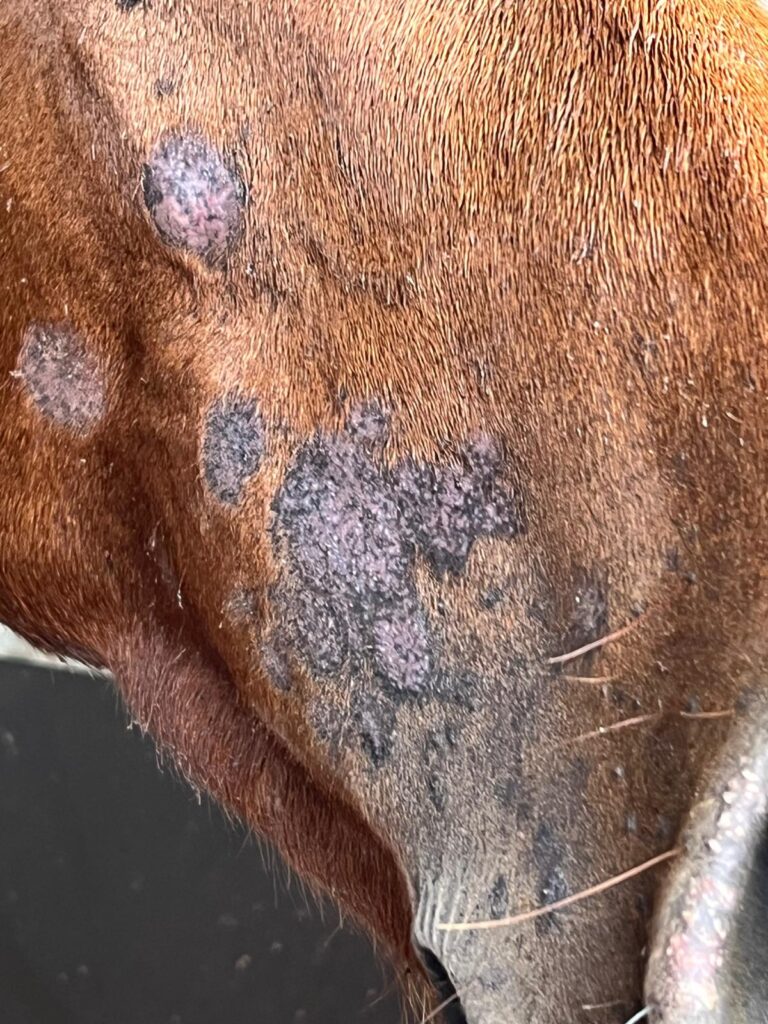
• Small tufts of hair that stick up slightly before bald patches appear
• Patchy or circular hair loss
• Scabby, crusty or flaky skin — often grey or silvery
• Hair that breaks or pulls out easily
• Mild itching (though not usually severe)
Healing usually starts within 1–4 weeks of treatment, but full hair regrowth can take longer.
Because it spreads before you might notice it, once one horse has ringworm, it’s likely others have been exposed too.
Top tip: Early detection = faster recovery and less spread around the yard.
Diagnosis
Your vet can often identify ringworm just by looking, but to be sure they might:
• Examine hair or skin flakes under a microscope
• Send samples for fungal culture (which takes 7–14 days)
Since culture results take time, most vets advise starting treatment right away rather than waiting.
Some UK labs (like Liphook Equine Hospital) now use PCR tests, which are much quicker and more accurate.
Treatment & Management
Mild cases might clear on their own, but treating it helps stop it spreading around your yard — and onto you!
Your vet will usually recommend:
• Whole-body antifungal washes, like Imaverol, with full instructions on how often to apply.
• Possibly clipping or trimming scabby or matted areas (only under strict hygiene disinfect your clippers with EndoSan). Some vets prefer not to clip to avoid spreading spores.
• Gently removing scabs (if advised by your vet) to help the treatment reach the skin.
• Keeping the horse dry and well-ventilated — fungus loves moisture.
• In severe cases, oral antifungal medication may be prescribed, but these must be used carefully and under veterinary supervision.
Environmental & Yard Management
This is where you can really make a difference in stopping an outbreak.
- Isolate affected horses straight away.
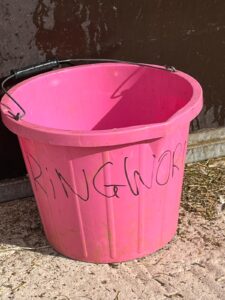
• Use dedicated equipment — separate tack, rugs, buckets, brushes and mucking tools.
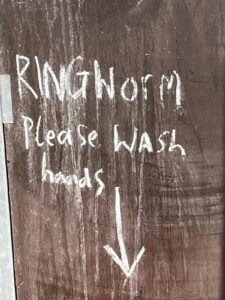
• Use boot dips, gloves, and hand sanitiser when handling infected horses.
• Clean and disinfect everything — stables, walls, floors, trailers, fencing, rugs and tack.
EndoSan disinfectant is antifungal and sporicidal, with a 99.999% kill rate.
• Dispose of or burn contaminated bedding, wipes and non-washable gear.
• We offer a yard disinfecting service to treat your stables, horseboxes, tack rooms and walkers — get in touch as soon as you suspect ringworm so we can help reduce spread and guide you on biosecurity measures.
Prognosis & Duration
• With treatment, you’ll often see hair regrowth within
1–4 weeks
• If untreated, ringworm can linger for
2–3 months or more
• Once a horse recovers, they may have partial immunity to that fungal strain — but not to others
• Re-infection is possible if spores remain in the environment, so
hygiene is everything
What Not to Do
- Don’t ignore mild patches — act fast!
• Don’t share gear between horses unless disinfected.
• Don’t clip or groom infected areas with shared tools.
• Don’t assume a horse is clear just because it looks better — finish the full treatment.
Quick Checklist for Owners & Yard Managers
Quick Checklist for Owners & Yard Managers
✅ Monitor horses daily for signs like flaking or tufted hair.
✅ Isolate any suspicious cases immediately.
✅ Call your vet for advice.
✅ Start treatment under vet guidance.
✅ Wear gloves and protective clothing.
✅ Don’t share equipment.
✅ Disinfect everything with EndoSan.
✅ Dispose of contaminated bedding and items safely.
✅ Keep treating until the vet confirms full recovery.
✅ Quarantine new arrivals for 2–3 weeks where possible.
💬 Final thought:
Ringworm can happen to the best-kept horses and yards — it’s nothing to be embarrassed about! With prompt action, good hygiene, and the right treatment plan, your horses (and your yard) will be fungus-free in no time, get in touch for help and advice,
In other news;
Equine Infectious Disease Surveillance report that strangles cases have been significantly higher in the uk this year. Highlighting once again the importance of effective prevention and biosecurity measures. Have a chat with your vets about the new Strangles vaccine!