
West Nile Virus. African Horse Sickness. New World Screwworm.
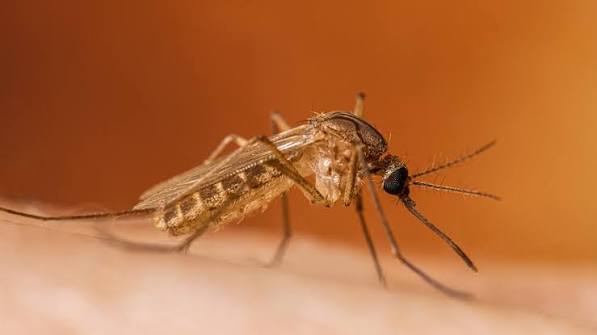
Three very different disease threats – and three names that probably don’t feature very often in conversations on the average UK stable yard.
So why are we talking about them?
Because the disease picture is changing.
Horses travel further and more frequently. Insects and other disease vectors don’t recognise borders. Weather and environmental conditions influence where those vectors can survive. And diseases and parasites that were once associated with particular parts of the world are being detected in new places.
That doesn’t mean we should panic.
But it does mean we should be paying attention.
At Ag Plus, we spend a lot of time talking about prevention. And prevention starts with understanding the risk before it becomes a problem.
So, what are these emerging diseases, how could they affect our horses and, importantly…
Are we ready?
Haven’t We Got Enough Diseases to Worry About Already?
You might be thinking – West Nile Virus, African Horse Sickness, New World Screwworm… really?
After all, UK horse owners already have plenty to think about.
We’ve seen equine influenza outbreaks this year, alongside the familiar disease alerts for Strangles and EHV.
But perhaps that’s exactly why we should be talking about emerging diseases.
Because the diseases we already know have shown us just how easily infection can travel through our incredibly interconnected equestrian world.
In 2026, we’ve had a particularly stark reminder from equine influenza. By 7 May, 44 laboratory-confirmed outbreaks had been reported across 28 UK counties – and 61% involved horses that had recently moved premises before developing clinical signs.
Think about how much our horses move.
Competitions. Training. Clinics. Camps. Racing. Sales. Breeding. New horses arriving on yards. Horses travelling across the UK and internationally.
Then think about everything and everyone moving with them – horseboxes, equipment, people and visiting professionals.
Our equestrian world is incredibly connected.
Most of the time that’s one of the great things about it.
From a disease’s point of view, however, those connections can provide opportunities to travel too.
Influenza, Strangles and EHV aren’t exotic emerging diseases. We already know them.
But every outbreak gives us the same reminder:
Disease doesn’t have to start on your yard to become your problem.
And that’s the link to the emerging diseases we’re looking at now.
We’re not suggesting these diseases are about to sweep through UK yards.
We’re asking whether we can take what the diseases we already deal with have taught us and use it to become better prepared for the diseases we might face in the future.

West Nile Virus – Should We Be Thinking About It?
West Nile Virus might sound like one of those diseases that happens somewhere else.
But is it something we should be thinking about here in the UK?
Yes – but without panicking!
West Nile Virus (WNV) is carried by mosquitoes. The virus naturally circulates between birds and mosquitoes. A mosquito feeds on an infected bird, picks up the virus and can then pass it on when it bites a horse.
Here’s the important bit:
An infected horse cannot pass WNV directly to another horse or person.
Horses are what we call dead-end hosts – they don’t develop enough virus in their bloodstream to continue the normal transmission cycle.
What would you notice?
Most horses infected with WNV won’t show any signs at all.
But in the small proportion that develop neurological disease, it can be very serious.
A horse may initially appear dull, tired or off its food. More obvious signs can include:
- Muscle tremors or twitching
- Weakness or stumbling
- Loss of coordination
- Facial weakness
- Head pressing
- Difficulty getting up
- Seizures or paralysis
Signs generally develop around 3–15 days after infection.
There is no specific treatment for WNV, so veterinary treatment is supportive while the horse’s immune system fights the infection.
Many horses do recover, but recovery can be lengthy and some can be left with neurological problems. Sadly, around 30–45% of horses showing clinical disease do not survive.
So why are we talking about it now?
Here’s where it gets interesting.
In 2023, WNV genetic material was reported in mosquitoes collected in Nottinghamshire – the first detection in British mosquitoes.
That doesn’t mean West Nile Virus is circulating amongst UK horses. Surveillance has not shown ongoing transmission.
But it does demonstrate why surveillance of mosquitoes, birds and horses is becoming increasingly important.
And it brings us back to something we talk about regularly at Ag Plus:
Biosecurity isn’t just about disinfecting stables or stopping one horse infecting another.
Sometimes we need to look at the environment around the horse too.
What can we do?
Mosquitoes need water for the aquatic stages of their lifecycle, so take a look around your yard.
Old buckets left outside?
Water sitting in tyres or containers?
Blocked gutters?
Wheelbarrows collecting rainwater?
Areas of unnecessary standing water?
Small changes matter.
Remove unnecessary standing water, keep water containers clean, maintain gutters and drainage and think about mosquito exposure, particularly during warmer weather.
Vaccination against WNV is available for horses in the UK and is particularly relevant when travelling to areas where WNV is circulating. Speak to your vet well before travelling.
And remember: West Nile Virus is a notifiable disease in the UK.
But What Has Bluetongue Got to Do With Horses?
You might be wondering why we’re suddenly talking about Bluetongue.
After all…
Bluetongue doesn’t affect horses.
It affects ruminants such as sheep and cattle, so what’s it got to do with us?
Actually, quite a lot – because of how it got here and how it spreads.
Bluetongue is predominantly transmitted by tiny Culicoides biting midges.
Sound familiar?
They’re the same group of biting midges responsible for transmitting African Horse Sickness.
Not necessarily the exact same species of midge, but the same group of vectors.
And that’s why the recent Bluetongue story should be of interest to the equestrian world.
Look at what happened…
BTV-3 was first reported in the Netherlands in September 2023.
It spread rapidly, with cases reported in other northern European countries.
Then, on 10 November 2023, the first BTV-3 case was confirmed in England.
One of the recognised routes of introduction?
Infected Culicoides midges carried across from continental Europe on the wind.
And since then we’ve seen how dramatically the UK Bluetongue situation can change when the virus, susceptible animals, suitable midges and the right weather conditions come together.
Think about that.
Something as tiny as a midge can be carried considerable distances.
You can’t disinfect it at the border.
You can’t ask where it has travelled.
And you certainly can’t put it into isolation for three weeks!
That’s why Bluetongue matters to us.
Not because horses can catch it – they can’t.
But because it gives us a real-life demonstration of how a vector-borne animal disease can move across Europe and reach Britain.
It doesn’t mean African Horse Sickness is heading our way.
But it does show us that being an island doesn’t automatically protect us from vector-borne disease.
And that brings us to our next emerging disease…
African Horse Sickness – Are We Ready?
African Horse Sickness.
The name itself tells us where we traditionally associate this disease – Africa.
The disease has never had an outbreak in Great Britain.
So why are we talking about it?
Because the experience of Bluetongue gives us a very good reason to understand midge-borne disease before we ever have to deal with it.
African Horse Sickness (AHS) is a serious viral disease affecting equids including horses, ponies, donkeys, mules and zebras.
It is carried and spread by Culicoides biting midges.
And here’s another important point:
AHS isn’t spread directly from horse to horse.
The midge acts as the vector, feeding on an infected animal and potentially carrying the virus to another.
What would you see?
AHS can appear in several different forms, which means the clinical picture can vary.
Signs can include:
- A sudden high temperature
- Rapid, difficult or laboured breathing
- Coughing
- Frothy discharge from the nostrils
- Swelling and redness around the eyes
- Swelling of the face, neck or chest
- Weakness or collapse
The severe pulmonary form can progress frighteningly quickly.
Other horses develop the cardiac form, where swelling – particularly around the eyes, face and neck – can be prominent.
There is also a mixed form, where signs of both can occur.
Unfortunately, AHS can have a very high mortality rate in horses, particularly in its severe forms.
So what can we actually do?
This is where biosecurity becomes much broader than simply cleaning and disinfecting.
Think about:
Horse movements – Where have new arrivals come from? Where have your horses travelled?
Monitoring – Do you know your horses’ normal temperatures? Would you recognise a change quickly?
Midge exposure – Could exposure to biting insects be reduced if the disease risk changed?
Environment – Are drainage and wet areas around the yard well managed?
Isolation – Do you actually have somewhere suitable to isolate a horse?
Your outbreak plan – If movement restrictions were suddenly imposed, could your yard cope?
That last one is particularly worth thinking about.
An outbreak of a notifiable exotic disease isn’t simply about managing one sick horse.
Official disease-control measures could affect your entire premises.
African Horse Sickness is a notifiable disease in the UK.

New World Screwworm – What on Earth Is That?
This is probably the one on our emerging diseases list that will have most people asking…
What on earth is New World screwworm?
And until recently, it probably wasn’t something many UK horse owners had ever needed to think about.
New World screwworm (Cochliomyia hominivorax) is a parasitic fly that can affect warm-blooded animals including horses, livestock, wildlife, pets and people.
But it’s what its larvae do that makes this particular fly so concerning.
Most of us have seen maggots associated with dead or decaying material.
New World screwworm is different.
Its larvae feed on living tissue.
How does it start?
A female screwworm fly is attracted to a wound, where she lays her eggs.
And we’re not necessarily talking about a large, obvious injury.
Even a very small break in the skin can provide an opportunity.
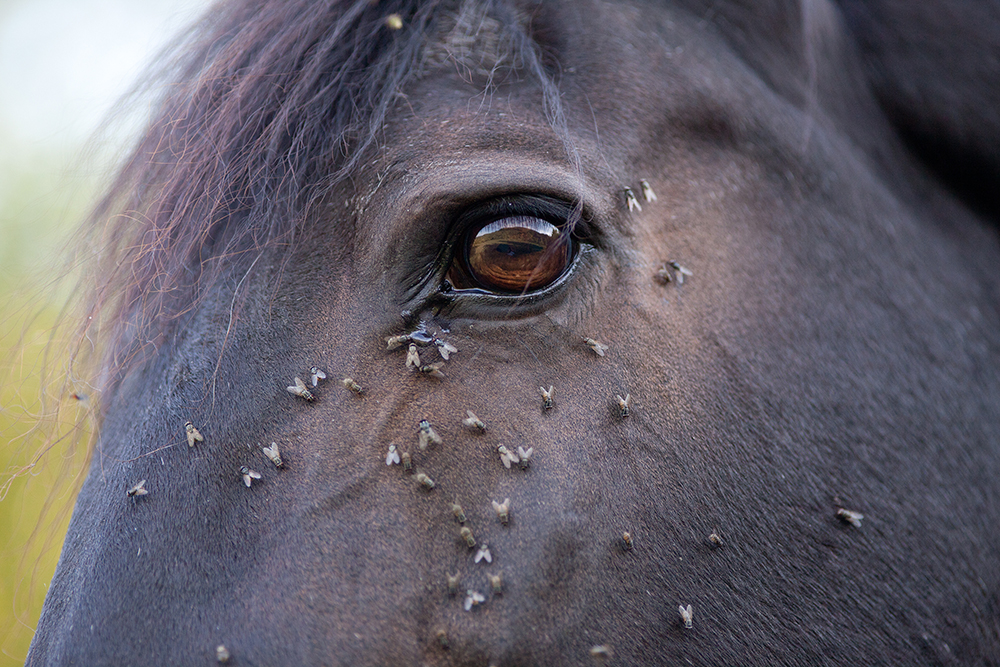
Eggs can also be laid around body openings including the eyes, ears, nose and mouth.
Once the eggs hatch, the larvae burrow into the wound and feed on living tissue.
Rather than healing, the wound can become larger, deeper, increasingly painful and foul-smelling.
What would you notice?
Things to look out for include:
- Maggots visible within a wound
- A wound becoming rapidly larger or deeper
- Increasing pain or swelling
- Bleeding or discharge
- An unpleasant or foul smell
- A wound that simply isn’t healing as you would expect
Left untreated, an infestation can cause extensive tissue damage and can potentially be fatal.
So why are we talking about it now?
Because New World screwworm provides a fascinating – and concerning – example of why we keep talking about emerging disease threats.
It had previously been successfully eradicated from large areas of North and Central America.
Problem solved?
Unfortunately, not quite.
Since 2023, an outbreak has moved northwards through Central America and Mexico.
And in June 2026, New World screwworm was confirmed in a calf in Texas – the first US animal case in the current outbreak.
That doesn’t mean our horses in the UK are suddenly at risk.
But it does make this one to watch.
And here’s the fascinating bit…
How do you fight a fly whose larvae feed on living animals?
You release more flies!
It sounds completely backwards, but one of the major tools used to control New World screwworm is the Sterile Insect Technique – or SIT.
Huge numbers of male screwworm flies are bred, sterilised and released into affected areas.
Female screwworm flies normally mate only once.
So if a female mates with a sterile male, her eggs don’t develop.
Do this on a large enough scale and, generation by generation, the population falls.
It’s a fascinating example of disease control being about much more than disinfectants, medicines or vaccines.
What does this mean for us?
For UK horse owners, this is currently about awareness rather than alarm.
But there are some very familiar principles here.
Check your horse.
Don’t ignore small wounds, particularly when travelling.
Manage wounds properly.
Keep wounds clean, monitor healing and protect them from flies where appropriate.
Think about fly control.
Know what normal healing looks like.
And if you find maggots in a wound?
Don’t simply assume they’re ordinary fly larvae. Speak to your vet.
So… Are We Ready?
Perhaps the answer is:
Not completely – but being ready starts with being aware.
West Nile Virus, African Horse Sickness and New World screwworm are three very different threats.
One involves mosquitoes.
One involves midges.
One involves a parasitic fly.
But they all teach us something.
Disease risks change.
Our familiar diseases – Influenza, Strangles and EHV – have already shown us how easily disease can exploit the movement and connections within our equestrian world.
Bluetongue has shown us how quickly the picture can change when vectors become part of the equation.
West Nile Virus reminds us to look beyond the stable walls and think about mosquitoes and our environment.
African Horse Sickness reminds us why watching what’s happening elsewhere matters.
And New World screwworm reminds us that even something successfully eradicated from an area can re-emerge.
We can’t prevent every disease from reaching our shores.
We can’t stop a midge being blown across the Channel.
We can’t control every mosquito.
And we certainly can’t put a disinfectant mat around the UK!
But we can control much of what happens on our own yards.
Good biosecurity isn’t something you suddenly start doing when an outbreak appears on the news.
It’s what you do before there’s a problem.
Knowing your horses.
Monitoring temperatures.
Managing new arrivals.
Understanding horse movements.
Having suitable isolation facilities.
Managing water, drainage and vectors.
Cleaning and disinfecting effectively.
Training staff.
And having an outbreak plan that people actually know how to use.
How Can Ag Plus Help?
At Ag Plus, our focus is prevention and preparedness, not panic.
We can help you take a practical look at your yard and ask three really important questions:
Where could disease enter?
How could it spread?
And what can we put in place now to reduce the risk?
From yard biosecurity reviews and bespoke biosecurity plans to new-arrival and isolation procedures, outbreak planning, cleaning and disinfection protocols, water hygiene and staff education, we can help put practical systems in place that work for your yard.
Because there’s little point having a beautiful biosecurity policy sitting in a folder if nobody knows what to do when a horse develops a temperature at 7 o’clock on a Sunday morning.
Don’t wait for the next disease alert to ask, “Are we ready?”
Ask it now.
Know your risks. Have a plan. Be prepared.
Ag Plus Biosecurity Specialists
Practical biosecurity. Disease prevention. Preparedness.
Trusted information sources from APHA/DEFRA, UKHSA, BEVA, WOAH, Equine Infectious Disease Surveillance (EIDS), British Equestrian, CDC and USDA APHIS.