
Hello, hoof care enthusiasts!
The winter season presents a whole new set of challenges for our horses’ hooves, and proper care is essential to keep them in tip-top shape. Whether you’re a seasoned equestrian or a newbie, understanding how the environment impacts hoof health and how to mitigate the risks is vital for your horse’s well-being.
Factors Affecting Hoof Health: What You Need to Know
Before we dive into winter-specific issues, let’s take a quick look at the key factors that influence hoof health year-round – there’s a whole range of factors to consider:
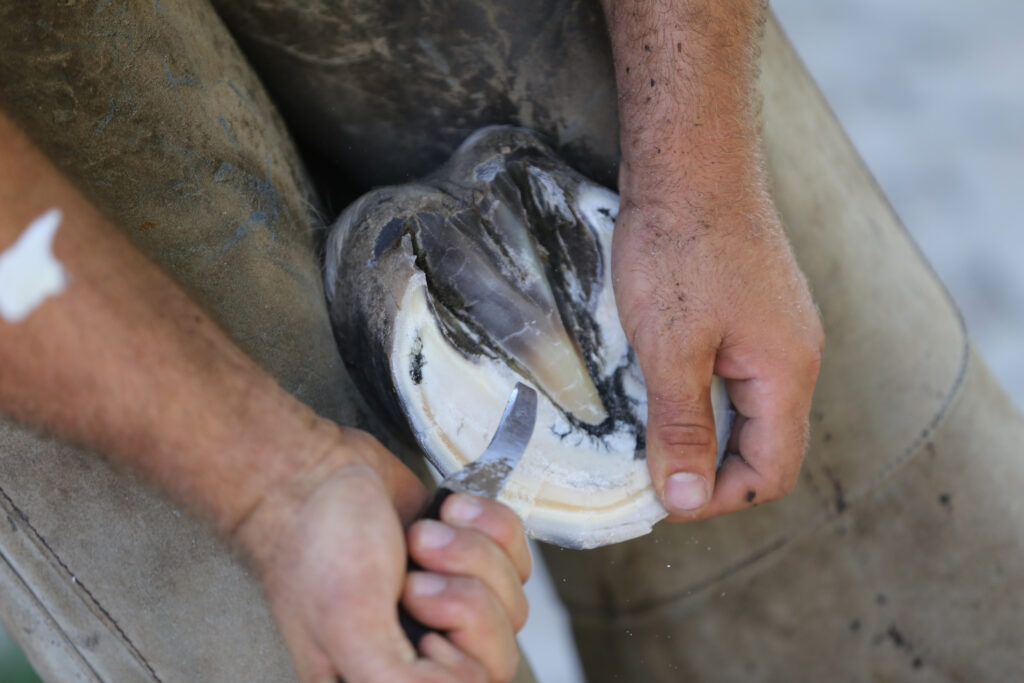
- The Farrier: Regular visits from your farrier are crucial for maintaining hoof balance and integrity. Consistent trimming and shoeing, helps prevent common hoof problems.
- Nutrition: A balanced diet, rich in the correct minerals, vitamins, and amino acids. Don’t underestimate the power of proper nutrition in strengthening hoof walls and soles.
- Hydration: A hydrated horse has hydrated hooves! The blood supply to the internal structures of the hoof relies on the circulatory system being hydrated.
- Exercise: Regular movement stimulates circulation, which is essential for hoof growth and health. Horses weren’t built to stand still – they need to move to keep their hooves strong.
- Conformation: Both the horse’s body and the structure of its hooves play a part in hoof health. Good conformation helps prevent stress on the hooves and supports proper hoof growth.
- Genetics: Some horses are naturally predisposed to strong, healthy hooves, while others might struggle with hoof issues.
- Metabolic Disorders: Conditions like laminitis and equine metabolic syndrome (EMS) can negatively affect hoof health. Managing these conditions is essential to maintaining strong hooves.
- The Environment: Finally, the environment where your horse lives has a huge impact on hoof health. Wet, muddy conditions, poor stable management, or inadequate turnout can all contribute to hoof problems.

Hoof Care and Exercise: Movement is Key!
One of the most important factors in maintaining healthy hooves is ensuring that your horse gets plenty of exercise. When horses move, it stimulates blood flow to the hooves, which encourages healthy hoof growth and strengthens the hoof tissue.
Think of it this way: the best farrier, diet, and environment won’t help if your horse isn’t getting enough movement. Hoof health is closely tied to circulation, and nothing promotes good circulation like exercise. So, even during the winter months, try to make sure your horse is getting out and about, whether it’s through turnout or ridden work.
The Natural Environment: Turnout and Companionship Matter
“A natural environment is best for horses.” While many of us can’t give our horses the freedom of roaming wild over varied terrains, we can still try to simulate this as best we can. Turnout in different areas with various surfaces allows the hooves to naturally cleanse themselves.
But here’s something that often gets overlooked: horses are social creatures. If your horse is turned out alone, it can experience stress and anxiety, which impacts more than just its mental state. Stress can lead to imbalances in the horse’s gut health, which in turn affects hoof health.
Winter Challenges: Moisture and Soft Hooves
Now, let’s get into the winter-specific challenges we all face. During the wetter months, horses are often turned out in wet, muddy conditions. Unfortunately, wet ground can cause hooves to soften and expand. If hooves are not allowed to dry out periodically, this can lead to issues like thrush, abscesses, and weakened hoof walls.
A good solution to this is to provide a dry, hard-standing area where your horse can spend part of the day to allow its hooves to dry, this will help maintain hoof integrity.
Did you know?
Nailing shoes on to wet hooves means that the nails do not hold well, so shoes are lost more frequently.
Ideally wet muddy feet need to be cleaned and left to dry for at least one hour before the farrier visits to prevent this happening!


The Perils of Prolonged Soaking
Dr. Susan Kempson from Edinburgh University conducted research into the effects of prolonged soaking on hooves, and her findings are eye-opening. She has a good analogy! Imagine spraying a piece of wood with water – initially, there’s not much change. But if you submerge the wood in water for a long period, it absorbs the moisture, softens, and weakens. This same process happens with hooves, making them more vulnerable to infection and disease.
Horses living out are more at risk, so try to ensure your horse has somewhere dry to stand for a short period every day to allow their hooves to dry out.
The Stabled Environment: Managing Bedding and Hygiene
The right bedding, proper ventilation, and regular mucking out are essential to keeping hooves healthy. Here are some things to keep in mind:
- Bedding Type: Good bedding provides both support and absorbency! It should allow for proper airflow to reduce the risk of fungal or bacterial growth.
- Moisture Control: Too much moisture on the surface of the bedding can soften the hooves, a bedding that is too dry can cause hooves to become brittle and cracked. Balance is key!
- Ammonia: Ammonia, a byproduct of urine, can build up in poorly ventilated stables. Not only does it pose a threat to respiratory health, but it can also damage the hoof wall over time. Regular mucking out, as well as providing deep bedding that absorbs urine effectively, can help reduce ammonia levels in the stable.
Hoof Dressings: What’s Best for Winter?
Not all hoof care products are created equal! Greasy dressings suffocate the hoof, preventing it from breathing and leading to long-term damage. Likewise, hoof dressings containing formalin (a diluted form of formaldehyde) should be avoided, as they can make hooves brittle and prone to cracking.
Hoof dressings containing solvents and tar are also damaging to hooves.
Caustic agents to be avoided are coper sulphate, bleach and turpentine. They do initially kill microbes but they also harm the healthy tissues.
There are products on the market now without harmful ingredients, like our Endosan disinfectant which is also organic and biodegradable.
Common Hoof Diseases and How to Prevent Them
Winter conditions can also make horses more prone to hoof diseases, particularly those that thrive in moist, anaerobic environments. Some of the most common hoof issues linked to the environment include:
- Cracks: Wet-dry cycles can cause cracks, allowing bacteria and fungi to enter the hoof.
- Abscesses: Saturated hooves allow bacteria to enter, causing painful abscesses.
- Thrush: Caused by anaerobic bacteria and fungus that thrive in wet bedding.
- White Line Disease: A condition where the hoof wall separates, often caused by prolonged wet conditions.
These conditions can be prevented by keeping hooves dry, clean and disinfect hooves regularly and maintain a healthy, well-managed environment.
Final Thoughts: Winter Hoof Care is a Team Effort
Maintaining healthy hooves through the winter requires a holistic approach. Regular farrier visits, balanced nutrition, consistent exercise, and stable management all play vital roles in ensuring your horse’s hooves stay in great shape. And remember, using products like EndoSan regularly will kill the pathogens that cause hoof diseases.